
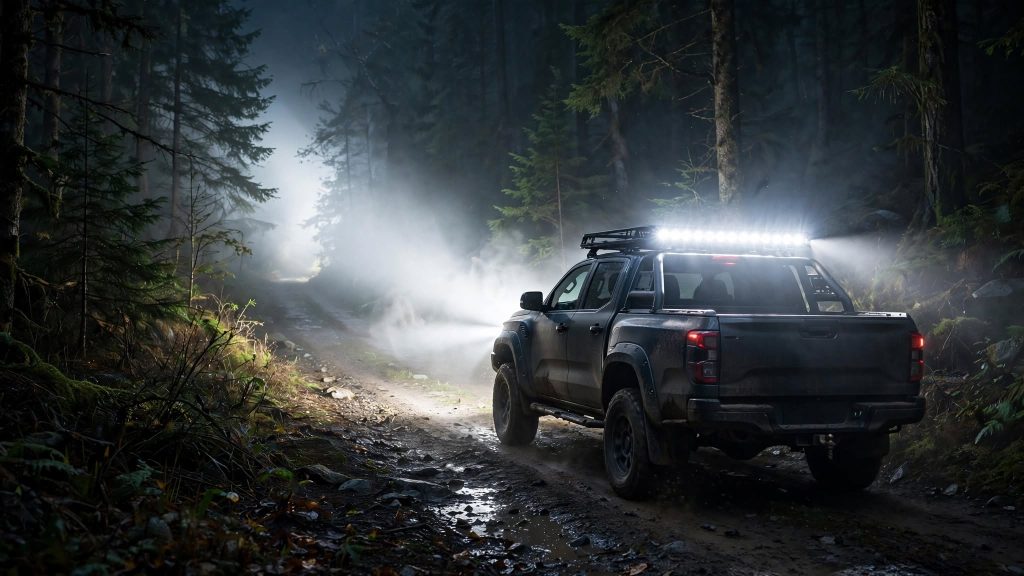
Driving after dark changes how quickly a driver can identify road conditions, obstacles, and changes in terrain. Standard headlights handle everyday paved-road driving, but their illumination may feel limited on rural roads, work sites, trails, and other poorly lit areas. LED light bars can provide additional illumination where extra visibility is needed.
A properly selected LED light bar can extend usable lighting beyond the normal headlight pattern and illuminate a wider portion of the surrounding area. Understanding beam patterns, mounting positions, glare, and appropriate use is important before adding auxiliary lighting to a vehicle.
How LED Light Bars Increase Nighttime Visibility
LED light bars contain multiple light-emitting diodes arranged inside a single housing. Depending on the design, reflectors or lenses direct the light into a particular beam pattern.
The main advantage is not simply adding more light. It is adding illumination in areas that the vehicle’s regular headlights may not cover effectively. On an unlit trail, for example, auxiliary lighting can make the edges of the route, upcoming bends, uneven ground, and nearby objects easier to see.
This additional field of view can be particularly useful for off-road vehicles, utility trucks, agricultural vehicles, and vehicles operating in remote locations after dark.
Seeing More of the Road Ahead
A driver’s available reaction time depends partly on how early something becomes visible. On a dark rural road or private track, an object outside the main headlight beam can be difficult to notice until the vehicle gets closer.
A forward-facing LED light bar with an appropriate beam pattern can illuminate farther ahead or expand the visible area around the roadway. This can help the driver identify curves, surface changes, branches, debris, or other obstacles earlier.
The effectiveness of the light depends heavily on its design and positioning. More output does not automatically mean better visibility if the beam is poorly controlled.
Beam Patterns Matter More Than Many Drivers Realize
LED light bars are available with different beam configurations. Choosing between them depends on where and how the vehicle will be used.
Spot Beams
A spot beam concentrates illumination into a narrower area. It is designed primarily for forward visibility over longer distances. This pattern can suit open trails, rural property, or other situations where seeing farther ahead is more important than lighting the immediate surroundings.
Flood Beams
A flood beam spreads light across a wider area. Instead of concentrating illumination far ahead, it improves peripheral visibility. This can be helpful when maneuvering at lower speeds, working around a vehicle, or driving through areas where hazards may appear from either side.
Combination Beams
Combination LED light bars incorporate both wider and more concentrated lighting characteristics. They can provide a practical balance for drivers who need visibility ahead while also wanting better coverage along the sides of a trail or work area.
If you are comparing beam types, mounting styles, or different auxiliary lighting options, How to Choose the Right LED Auxiliary Lights for Your Vehicle provides useful context for matching lighting equipment to the way a vehicle is actually used.
LED Light Bars Can Improve Peripheral Awareness
Night driving is not only about seeing directly ahead. Peripheral visibility also matters, especially on narrow trails, rural properties, construction areas, and uneven surfaces.
A wider auxiliary beam can illuminate shoulders, roadside features, entrances, obstacles, and changes in terrain that may sit outside the normal headlight pattern. This broader illumination can make the driving environment easier to interpret without forcing the driver to rely entirely on the relatively focused area covered by headlights.
For off-road driving, wider visibility can also help when approaching tight turns or navigating around rocks, vegetation, ruts, and other terrain features.
Mounting Position Affects Light Performance
Where an LED light bar is installed can change how useful its illumination becomes.
Roof-mounted light bars can provide broad forward coverage, but incorrect positioning may cause unwanted reflections from the hood, windshield, dust, or airborne moisture. Lower mounting positions near the grille or bumper may reduce some reflections while directing illumination closer to the road surface.
The light should also be aimed carefully. A poorly aimed auxiliary light can create excessive foreground brightness, making distant areas comparatively harder to see. It can also produce glare for other road users.
Installation therefore involves more than attaching the largest available light bar to the vehicle.
Color and Contrast Affect What Drivers See
Visibility depends on contrast as well as brightness. Road surfaces, dust, rain, fog, vegetation, and reflective objects can all interact differently with artificial light.
Extremely intense illumination close to the vehicle can sometimes work against the driver’s goal by making the foreground very bright while leaving distant areas comparatively dark. Light reflecting from fog, dust, or precipitation can also reduce useful visibility.
For this reason, a controlled beam pattern and sensible aiming are often more useful than simply maximizing light output.
Practical Considerations Before Installing a Light Bar
An LED light bar should complement the vehicle’s existing lighting rather than replace properly functioning headlights. Before installation, consider the vehicle’s electrical system, mounting location, wiring, switching arrangement, and intended driving environment.
Drivers should also check local rules governing auxiliary vehicle lighting. Regulations can differ regarding where additional lights may be mounted and when they can be used on public roads.
For vehicles that spend most of their time in normal urban traffic, powerful auxiliary lighting may offer limited practical benefit. Its advantages become more apparent in environments with little or no existing illumination, particularly off-road areas, farms, private property, remote worksites, and similar locations.
Avoiding Glare and Excessive Lighting
More illumination is useful only when it helps the driver see clearly. Excessive or badly directed light can create glare and make driving uncomfortable for both the vehicle operator and other road users.
Auxiliary lights should be aimed so their beam serves the intended area without unnecessarily shining into approaching traffic. Drivers should also switch them off whenever their use could interfere with other motorists.
Keeping lenses clean is equally important. Mud, dust, road grime, and moisture on the lens can alter the beam pattern and reduce effective illumination.
Conclusion
LED light bars can improve night driving visibility by extending forward illumination, widening peripheral coverage, and providing lighting patterns suited to environments where standard headlights may have limitations. Their usefulness is especially noticeable during off-road driving and work in remote or poorly illuminated areas.
Choosing the right beam pattern, mounting the light correctly, aiming it carefully, and using it responsibly are just as important as the light itself. A well-planned setup provides useful illumination where it is needed without creating unnecessary glare or excessive foreground brightness.